Nuclear Sector Decontamination of Spent-Fuel Handling Casks to Free-Release Levels
Decontamination of Spent Fuel Handling Casks to Free-Release Levels: Industrial Trial of the Radion Core Technology in the Nuclear Sector
Abstract
Between 27 July and 3 September 2009, an industrial-scale experimental programme was carried out at the facilities of a state atomic fleet enterprise to validate the Radion Core decontamination technology on T-26M type casks used in nuclear fuel handling operations. Twenty casks with initial surface contamination ranging from 70 to 8,000 Bq/cm² were processed. Incoming and outgoing radiometric monitoring confirmed that surface contamination was reduced to 0.5–5 Bq/cm² — values permitting free use of the stainless-steel components in subsequent recycling. Decontamination time per cask was 60 to 90 minutes, with no corrosion or mechanical damage to the products, no generation of liquid radioactive waste, and full concentration of removed activity on small-volume mechanical and sorption filters. Signed and apostilled confirmation of this project, issued directly by the atomic association, is available upon request.
1. Introduction
Radioactive contamination of equipment that has been in direct contact with spent nuclear fuel — such as T-26M fuel-handling casks — is characterised by complex radionuclide composition and high activity. The contamination comprises fission products (¹³⁷Cs, ⁹⁰Sr), neutron-activation products of reactor structural materials (⁶⁰Co, ¹⁵²Eu, ¹⁵⁴Eu), and highly active microparticles of fuel-cladding material and of the fuel itself.
Radiation safety standards require additional personnel-protection measures and dedicated tooling when handling such products — tooling which itself becomes contaminated in the course of the work. Conventional approaches to removing contamination of this level and composition — mechanical treatment (grinding, shot blasting, sand blasting) or existing decontamination compounds — inevitably generate secondary solid and liquid radioactive waste (filings, shavings, spent process solutions) and do not achieve a complete result. Prior to this trial, no technology existed that was capable of removing products of this kind from the category of radioactive waste.
2. Scope and Methodology
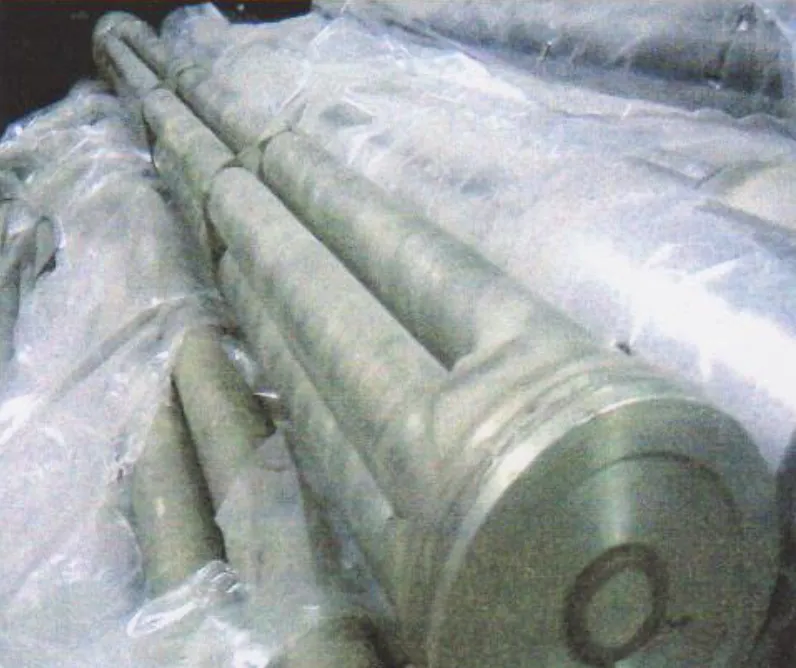
The experimental programme covered twenty T-26M type casks previously used in nuclear fuel handling operations. Each cask underwent incoming radiometric monitoring (maximum dose rate and surface contamination), decontamination using the Radion Core closed-cycle process, and outgoing radiometric verification.
The process employs an IFT-D working solution circulated in a closed cleaning cycle through a 1 m³ tank equipped with a 5-micron mechanical filter, complemented by sorption filtration of the wash water. Where required, a hydrodynamic method of cavity cleaning was applied to increase decontamination efficiency on reusable products. Working solutions were maintained at 20–25 °C using a heater rated at 5 kW, making electric power consumption during operation minimal.
3. Results
3.1 Incoming and outgoing radiation parameters
The dose rate remaining after decontamination in several units was attributable to the activity of spillage in the bottom part of the cask, which is inaccessible to open washing.
| Cask No. | Dose rate max before, mR/h | Contamination before, Bq/cm² | Dose rate max after, mR/h | Contamination after, Bq/cm² |
|---|---|---|---|---|
| 509 | 90 | 200 | 0.20 | 0 to 0.5 |
| 434 | 120 | 320 | 0.80 | 0.5 to 2 |
| 660 | 30 | 130 | 1.50 | 0 to 0.5 |
| 184 | 40 | 90 | — | 0 to 0.5 |
| 105 | 380 | 2,500 | 50 | 2 to 5 |
| 485 | 50 | 750 | 2.50 | 0 to 0.5 |
| 456 | 310 | 1,100 | 7.0 | 2 to 5 |
| 319 | 40 | 260 | 0.40 | 0 to 0.5 |
| 528 | 2 | 80 | — | — |
| 274 | 320 | 8,000 | 47 | 2 to 5 |
| 286 | 280 | 420 | 25 | 0.5 to 2 |
| 327 | 13 | 70 | — | — |
| 289 | 240 | 230 | 11 | 0.5 to 2 |
| 368 | 1,100 | 650 | 90 | 2 to 5 |
| 188 | 730 | 400 | 38 | 2 to 5 |
| 316 | 280 | 250 | 17 | 0.5 to 2 |
| 467 | 20 | 250 | — | 0.5 to 2 |
| unnumbered | 8 | 80 | — | — |
3.2 Activity balance
Activity transferred into the Revo-Clean solution from seven T-26M casks:
| Radionuclide | Activity |
|---|---|
| Co-60 | 39.9 MBq |
| Cs-137 | 72.0 MBq |
| Eu-152 | 8.25 MBq |
| Eu-154 | 67.5 MBq |
Activity of the wash water after decontamination of all twenty T-26M casks:
| Radionuclide | Activity |
|---|---|
| Co-60 | 1.98 MBq |
| Cs-137 | 13.4 MBq |
| Eu-152 | 2.38 MBq |
| Eu-154 | 5.50 MBq |
The low residual activity of the wash water after processing twenty casks — compared with the activity captured in the working solution from only seven — confirms the efficiency of the closed-cycle purification module in transferring and concentrating removed activity on the filtration stages.
3.3 Key findings
- Free-release performance. The technology decontaminated stainless-steel surfaces from initial radioactive contamination levels of 70 to 8,000 Bq/cm² down to 0.5–5 Bq/cm² — values allowing their free use in subsequent recycling.
- Processing time. The time required to decontaminate one T-26M cask is determined by the nature of the contamination and amounts to 60 to 90 minutes.
- Handling of highly active spillage. Where highly active spillage is present in the bottom part of the product, a single washing is not sufficiently effective. Separating the bottom part and decontaminating the two parts individually was experimentally confirmed: a previously separated product was decontaminated down to zero levels within no more than 30 minutes.
- Asset preservation. The technology decontaminates reusable products without corrosion or mechanical damage. Hydrodynamic cavity cleaning is applied to increase efficiency where needed.
- Waste concentration. The closed cleaning cycle concentrates removed activity on filter elements, which are conditioned and stored as solid radioactive waste (SRW).
- No liquid radioactive waste. In its industrial version, the technology allows repeated use and regeneration of the working solutions with concentrates, ruling out the formation of liquid radioactive and highly toxic chemical waste.
- Universality. The absence of complex process tooling ensures the universality of the technology for the decontamination of various products — tools, tooling, and assemblies and units of equipment under repair.
- Energy efficiency. Electric power consumption is minimal, determined solely by heating the working solutions to 20–25 °C with a 5 kW heater.
4. Conclusions
The trial demonstrated, under industrial conditions in the nuclear sector, that the Radion Core unit for cask decontamination — together with its wash-water and process-solution purification module — makes it possible to completely separate radioactive contamination from the surfaces being decontaminated and to concentrate the activity on mechanical and sorption filters of small volume. Equipment previously classified as radioactive waste was returned to free-release status suitable for recycling, without corrosion, mechanical damage, or the generation of liquid radioactive waste.
This validated process forms part of the technological foundation of Radion Core's decontamination capability for the nuclear decommissioning and NORM/TENORM sectors.
Signed and apostilled confirmation of this project, issued directly by the atomic association, is available upon request.