REVO-CLEAN™ in the Permian Basin: Full Asset Recovery of NORM-Contaminated ESP Systems
Published by Radion Core | NORM Asset Recovery | Field Case Study 2025
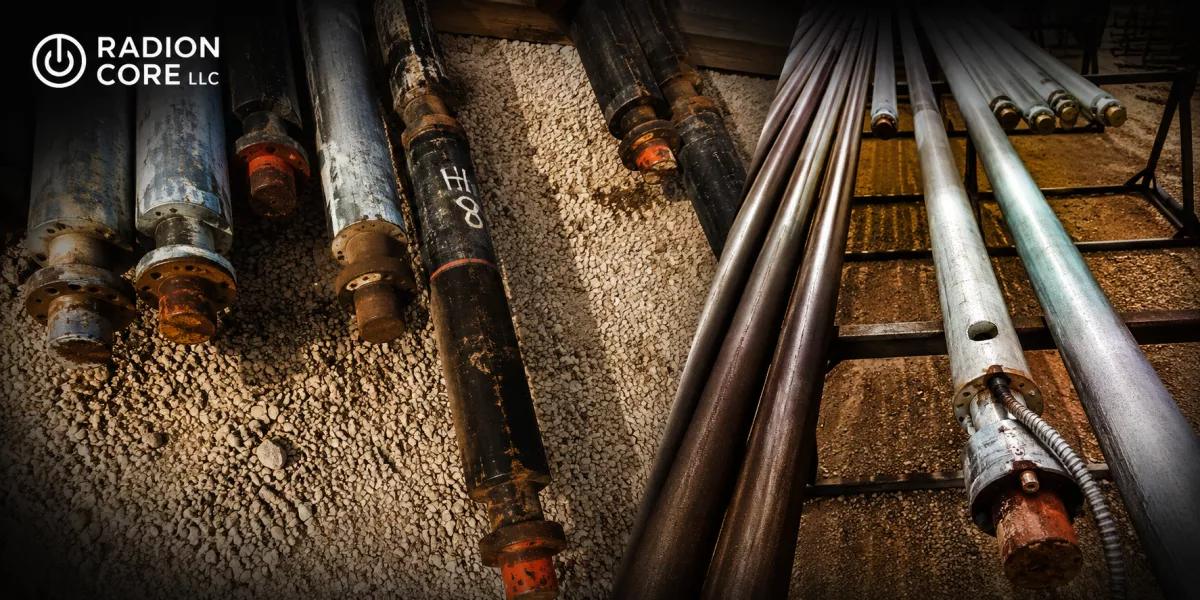
What follows is a summary of findings from a REVO-CLEAN™ field deployment in the Texas Permian Basin, where the technology was applied to the decontamination and full asset recovery of Electrical Submersible Pump (ESP) systems contaminated with Naturally Occurring Radioactive Material (NORM).
The case documents pre- and post-process radiological data, process performance against legacy methods, waste management outcomes, and independent institutional validation. All measurements were obtained using a Thermo Scientific RadEye G-20-ER10 gamma survey meter, with findings reviewed independently by Texas Tech University and the Air Force Institute of Technology.
The Radiological Environment: NORM at the Upper End of Field Severity
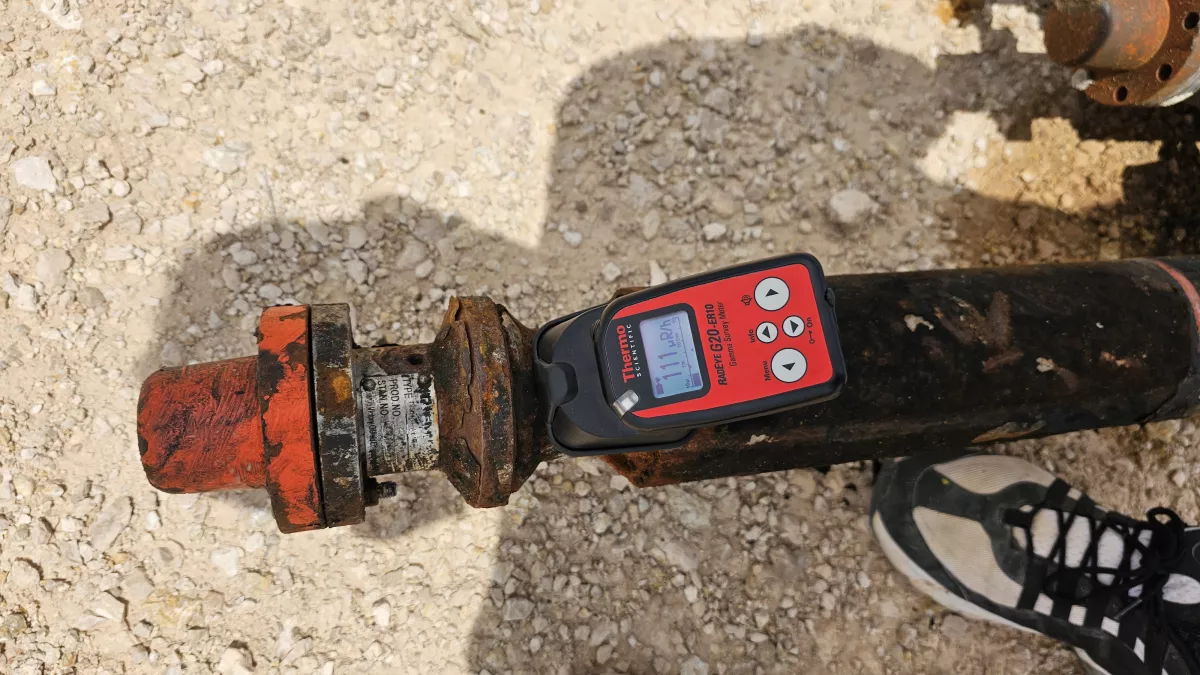
Instrument: Thermo Scientific RadEye G-20-ER10 gamma survey meter · contact readings on incoming ESP components prior to remediation
The Permian Basin presents one of the most challenging NORM environments in U.S. onshore oil and gas operations. Produced-water scaling in this basin is heavily enriched with Ra-226 and Ra-228 isotopes, locked within a barium-sulfate (BaSO₄) matrix that co-precipitates with heavy asphaltenes under downhole pressure and temperature conditions.
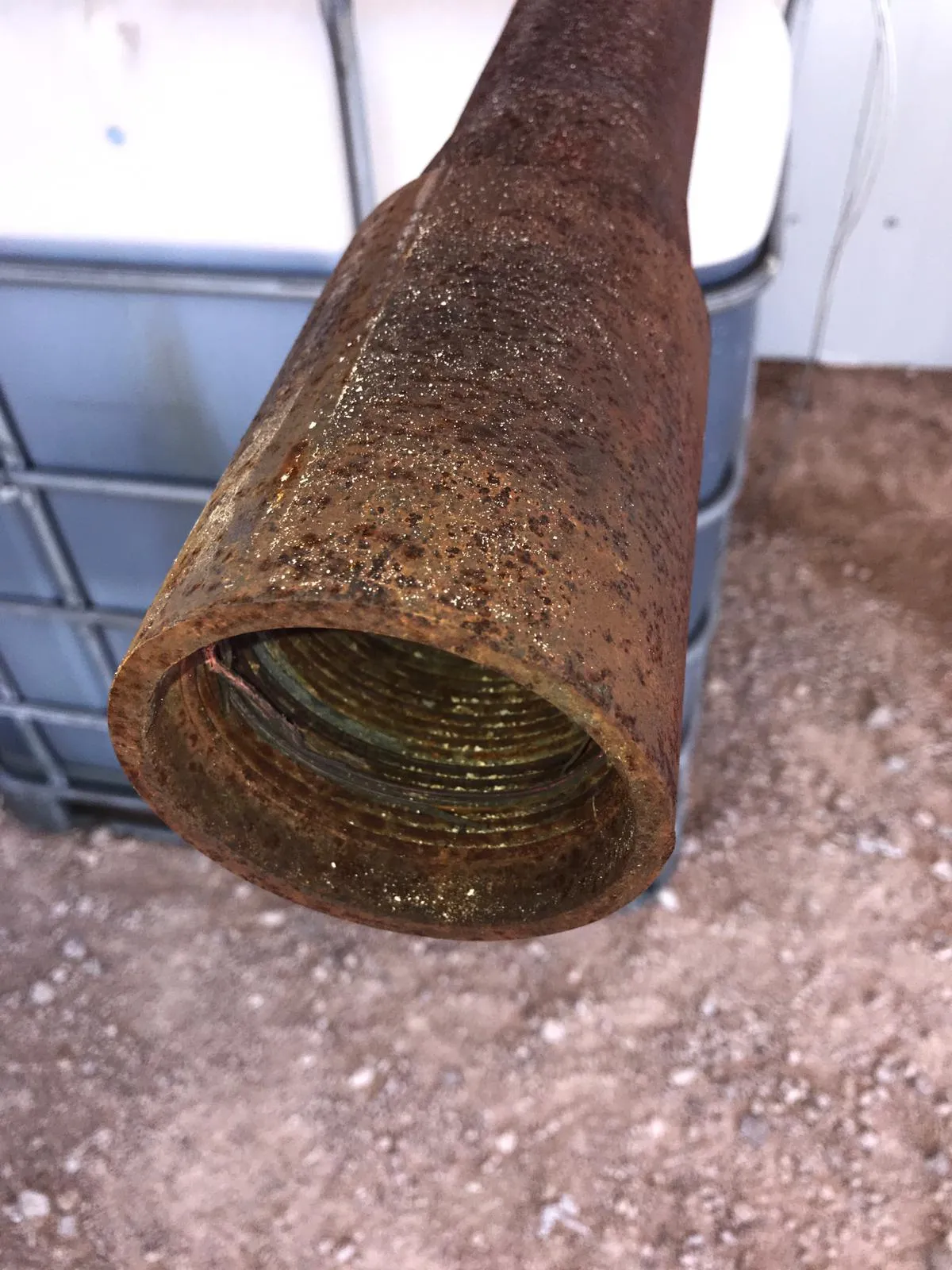
The result is a hard, dense, radioactively contaminated scale that bonds directly to metal surfaces, including the intricate internal geometries of ESP impellers, diffusers, pump housings, rotors, and shafts.
Contact gamma readings on incoming ESP components, taken prior to remediation, registered at 111 µR/hr. Components at this contamination level are classified as radioactive waste under applicable regulatory frameworks and are typically written off for disposal.
Why Standard Cleaning Methods Fail on ESP Systems
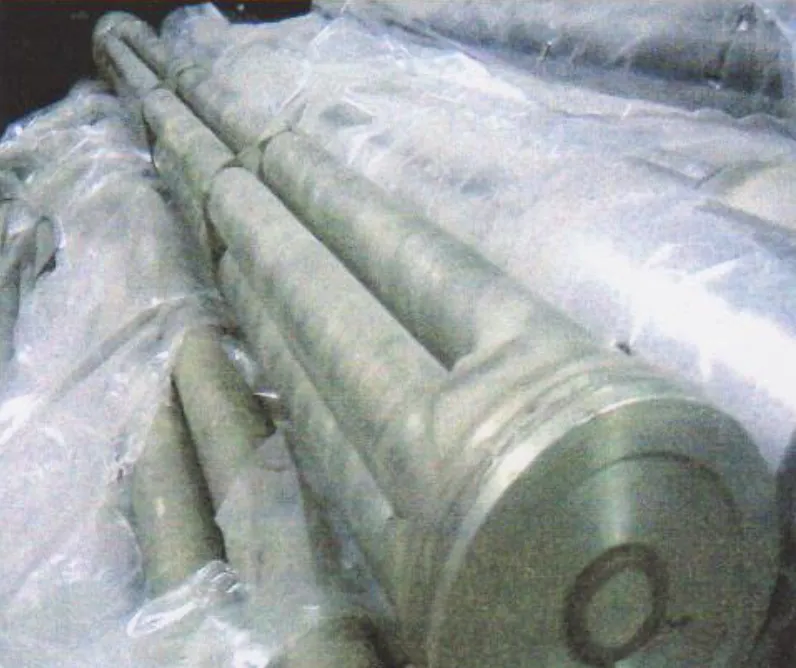
ESP assemblies are not analogous to production tubing or simple pipe strings. The internal architecture of curved diffuser channels, tight impeller clearances, and precision-machined rotors and shafts creates geometries that are inaccessible to conventional cleaning methods.
High-Pressure Water Jetting (HPWJ) cannot physically reach the curved internal surfaces where scale is deposited at the metal interface. Water jetting also generates significant volumes of radioactively contaminated liquid effluent, a critical disposal liability in Texas, where Saltwater Disposal (SWD) well capacity is being progressively restricted by state regulators in response to induced seismicity events.
Conventional acid cleaning presents a different but equally disqualifying failure mode. The high-alloy metallurgy of ESP components — Ni-Resist, Monel, and specialty stainless steels — is highly susceptible to pitting corrosion when exposed to aggressive acid formulations. Acid attack irreversibly etches impeller and diffuser surfaces, destroys hydrodynamic balance across the rotating assembly, and renders components permanently unserviceable. Assemblies worth tens of thousands of dollars are converted from a disposal liability into scrap.
Neither method is viable for ESP remediation at scale.
The REVO-CLEAN™ Process: Mechanism and Performance
REVO-CLEAN™ operates on a proprietary undercutting mechanism — a controlled mechanical-chemical separation that acts directly at the scale-to-metal interface. The working solution penetrates enclosed micro-cavities and internal channel geometries without line-of-sight access, progressively dissolving and releasing the contaminated scale matrix without contacting or reacting with the base metal.
The process runs as a continuous, fully automated cycle within a hermetically sealed closed-loop system. Organic matter released during cleaning, including Texas sludge, asphaltenes, and paraffins, is mechanically skimmed from the fluid surface and routed to standard non-radioactive recycling. The radioactive NORM fraction is concentrated into a compact dry sediment, drastically reducing hazardous waste volume relative to the liquid waste streams generated by HPWJ or chemical bath methods.
The system operates on a Zero Liquid Radioactive Waste Discharge (ZLRWD) model. No radioactive liquid effluent is discharged to the environment. The vacuum truck hauling costs historically associated with contaminated wastewater disposal are eliminated entirely.
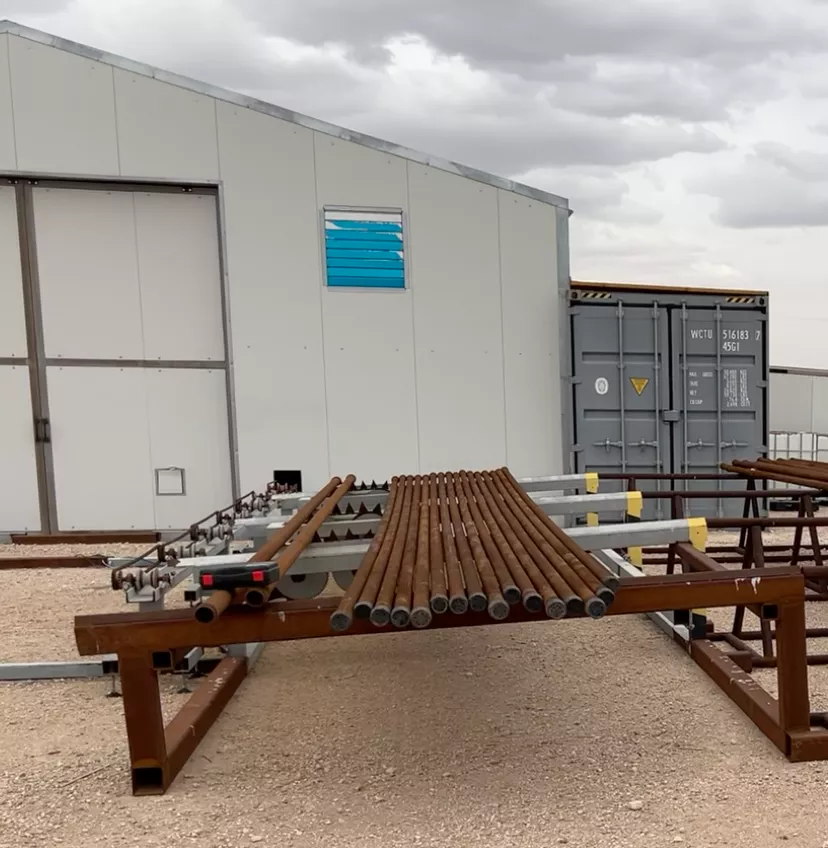
Containerised processing line - sealed, continously filtered
Radiological and Metallurgical Outcomes
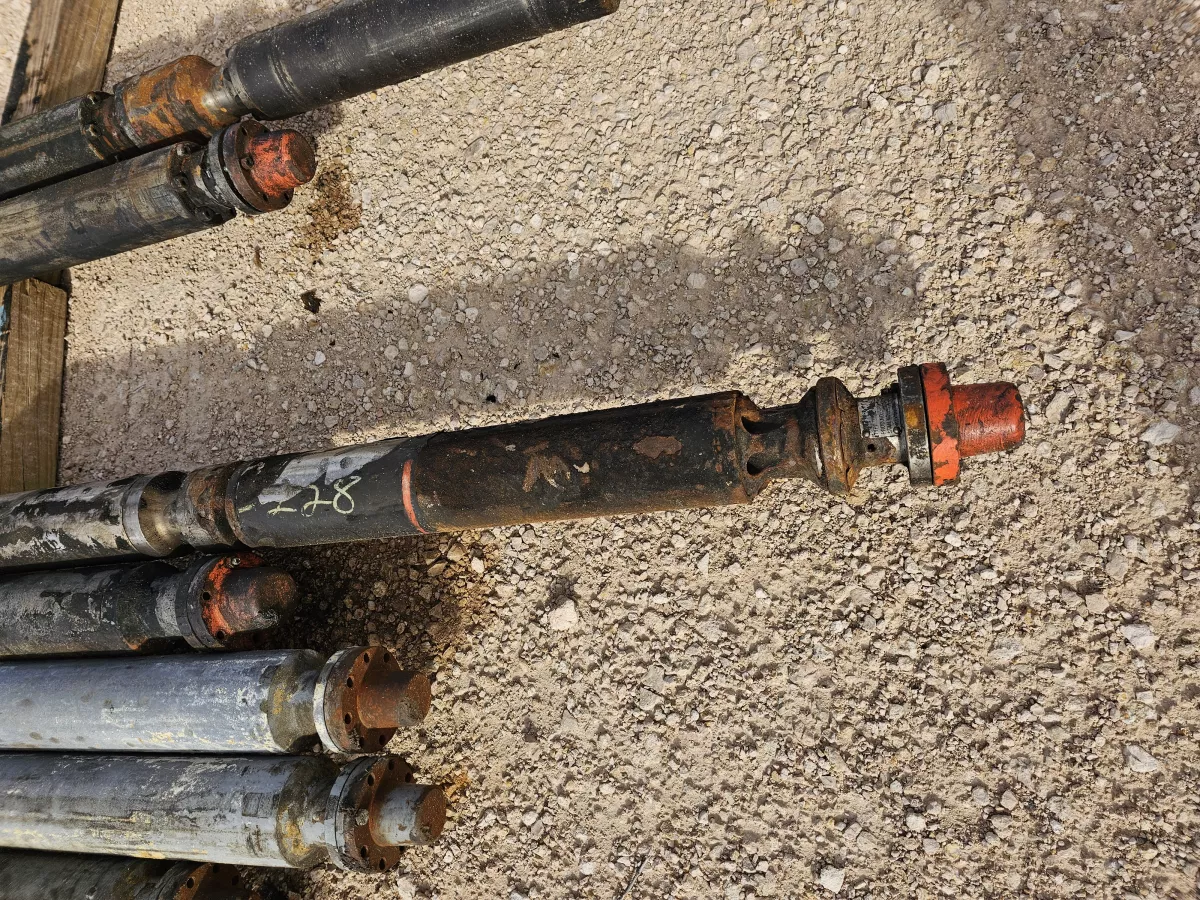
Post-process gamma survey of all treated ESP components returned readings of 0.00 µSv/hr, at natural background radiation levels. Components were cleared for unrestricted redeployment with no radiological restrictions.
Metallurgical inspection confirmed zero base-metal loss across all processed components. Impellers and diffusers exited the process with full wall integrity and dynamic balance preserved. No etching, no dimensional change, no rejection on reassembly.
Summary of pre- and post-process parameters:
Dose Rate (Contamination): Extremely Elevated > 0.00 µSv/hr Asset Status: Written off for disposal > Free Release, Natural Background Metal Integrity: Scale-encrusted, unserviceable > Homogeneous clean metal, zero loss
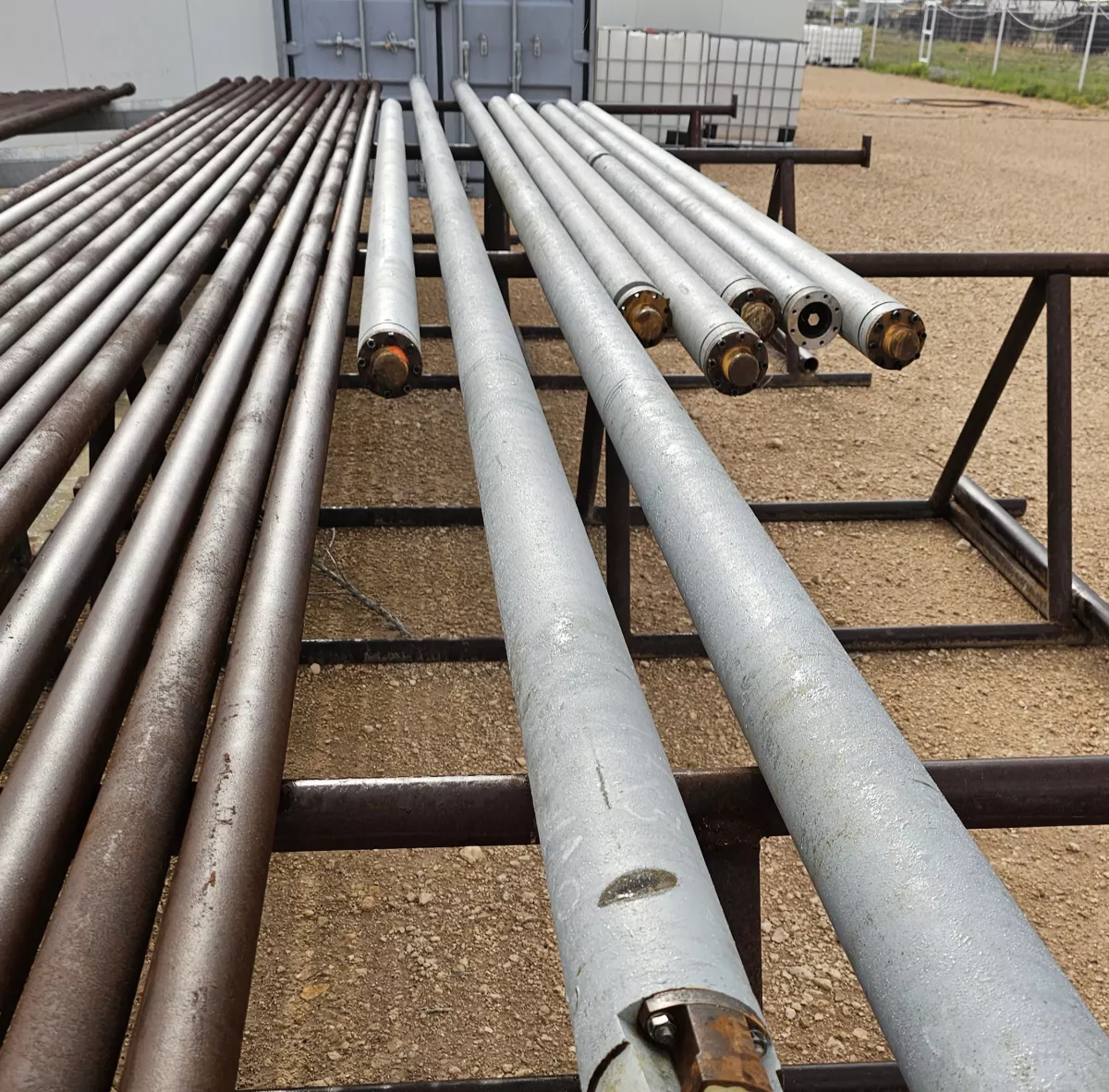
Turnaround Time: From Days and Weeks to Hours
In the Permian Basin operating environment, ESP downtime is a direct production loss. The legacy cleaning pathway — time-consuming dismantling, multi-day chemical soaking, manual scraping, and a high rate of component rejection — takes days to weeks per assembly, with no guarantee of a serviceable outcome.
REVO-CLEAN™ compresses this to hours. NORM and sludge are removed in a single automated pass. No dismantling damage, no manual intervention, no component rejection. Overall ESP service downtime was reduced by more than 60% against the legacy method baseline.
Application to Heat Exchangers
The same closed-loop chemistry was applied during this deployment to a fouled shell-and-tube heat exchanger with extensive mineral scale accumulation and corrosion product throughout the tube bundle. Using a controlled multi-stage circulation flush, REVO-CLEAN™ dissolved scale progressively across three passes, returning the bundle to bare clean metal in situ, with zero tube damage and no bundle removal required. Full flow and thermal transfer were restored.
This demonstrates the technology's applicability across multiple asset classes within the same operational campaign.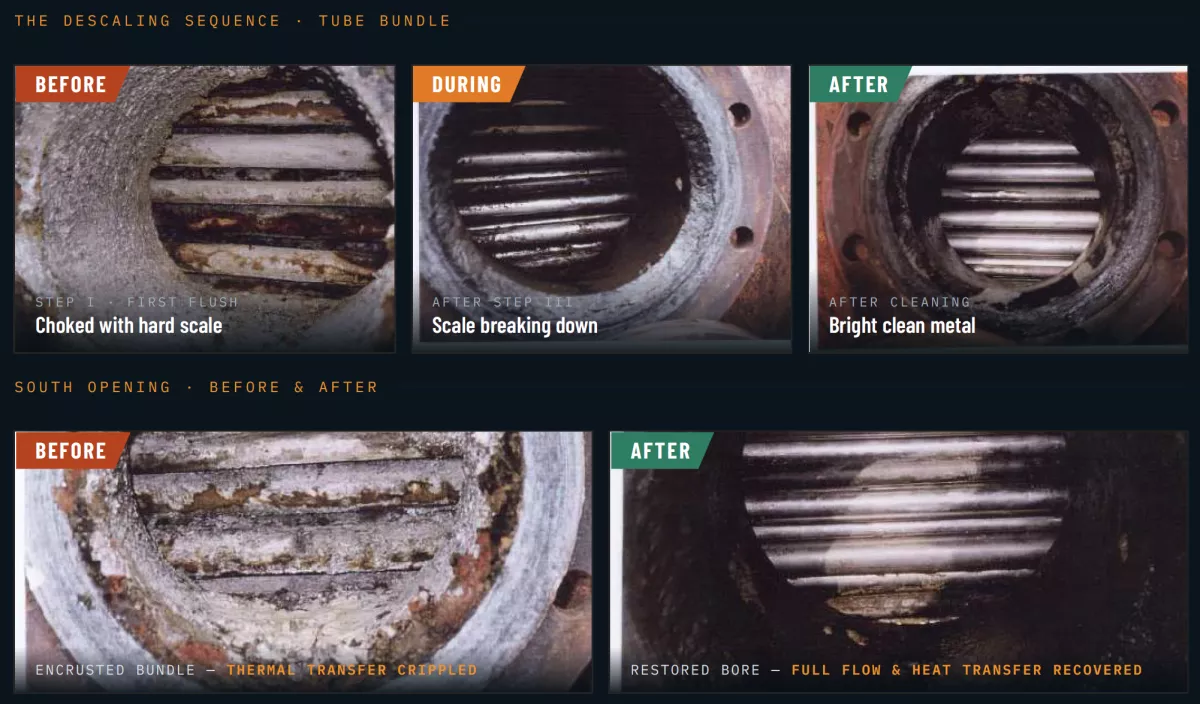
Commercial Framework: Value Created Per Recovered ESP Assembly
The commercial case for REVO-CLEAN™ in the Permian Basin is built across four independent value drivers. The figures below are illustrative ranges based on field conditions and are intended as a framework for operational discussion, not a guarantee.
Asset recovery (avoided replacement of Ni-Resist/Monel assembly): $20,000 to $80,000 Disposal avoidance (eliminated SWD hauling and NORM wastewater): $5,000 to $18,000 Production uptime (deferred output loss from faster ESP redeployment): $8,000 to $30,000 Liability reduction (lower NORM volume, storage and regulatory risk): $3,000 to $12,000
As Texas SWD capacity tightens further under seismicity-driven restrictions, the structural cost of the legacy disposal pathway will continue to rise, widening the economic differential between conventional methods and a Zero Liquid Radioactive Waste recovery process.
Institutional Validation
Dr. Steve Presley, Texas Tech University, confirmed that the technology restores assets to a Homogeneous Clean Metal standard without surface damage or structural degradation.
Prof. Adedeji Badiru, Dean of the Air Force Institute of Technology, assessed REVO-CLEAN™ as a technology of U.S. national interest that fundamentally shifts the paradigm of industrial NORM waste management by reducing volumes and associated liabilities.
Summary
REVO-CLEAN™ demonstrated measurable performance against each of the primary constraints facing ESP NORM remediation in the Permian Basin: radiological clearance to background, zero base-metal loss, zero liquid radioactive waste discharge, and a greater than 60% reduction in asset downtime versus legacy methods.
Components that would otherwise be disposed of as radioactive waste are recovered as serviceable capital assets, re-entering operation with no radiological restrictions.
For technical enquiries regarding REVO-CLEAN™ deployment, Phase 0 audit scoping, or asset recovery programme design, contact:
Vladimír Pecháček — NORM Asset Recovery info@radioncore.com www.radioncore.com
Radion Core LLC · 125 Co Rd 103, Seminole, TX 79360, USA
Radion Core Ltd · 12 Old Bond Street, Mayfair, London W1S 4PW, UK
ISO 9001 · 45001 · 14001 — ELBACERT